By James Randall
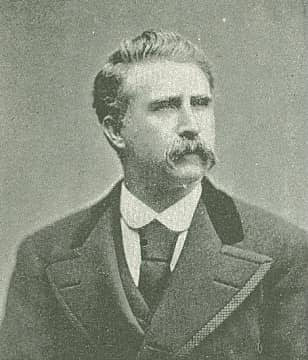
At seven o’clock on an ordinary morning in the early 1860s, a common laborer descended a mine shaft outside Virginia City for four dollars a day, the same wage paid to hundreds of other men who would leave the Comstock with nothing to show for it. John William Mackay was not, on the surface, different from any of them. He had already failed at mining once, in the placer camps of California, and he carried into Nevada nothing but eight years of hard-won knowledge about how ore behaved and how easily a man’s savings could vanish underground. Within fifteen years he would be one of the richest men in the world. The distance between those two facts is the real subject of his story, and it has less to do with luck than most retellings suggest.
From the Shipyards to the Diggings
Mackay was born in Dublin on November 28, 1831, and came to New York as a boy with his family. His father died while John was still young, ending what little formal schooling he had and pushing him into work. He apprenticed in shipbuilding before joining the rush west to California, where for roughly eight years he worked placer and drift mines in the Sierra Nevada without a strike worth mentioning.
That failure mattered more than it might seem. Mackay did not arrive on the Comstock as a financier hunting for a promising claim to buy. He arrived as a man who had already spent the better part of a decade learning how tunnels were driven, how timber held back unstable ground, and how quickly hope curdled into debt. University of Nevada archival records place him in Virginia City by 1859, working for wages and slowly accumulating small mining interests. The Dictionary of Irish Biography records that he found employment as a timberman on the Comstock before he attempted any ventures of his own.
The familiar rags-to-riches version of Mackay’s life is, in this sense, substantially true. It is only in the later polishing that it becomes a parable rather than a biography. He was poor by comparison with the San Francisco financiers who would eventually back him, but he was not a stranger who wandered into a fortune. By the early 1860s, he already understood the Comstock from inside its workings.
Learning the Comstock Underground
The Comstock of the 1860s did not reward men who could merely swing a pick. Its ore bodies ran broad, irregular, hot, and wet, prone to collapse without the elaborate timber cribbing that Comstock miners had learned to build. The mines depended on timbermen, hoisting crews, pumpmen, and superintendents who could keep a large, dangerous underground operation running day after day. Mackay’s early reputation grew out of that technical world rather than out of any single dramatic find.
Archival and institutional accounts trace his advance through small claims, contract work, the Bullion mine, and finally the Kentuck, a modest property in Gold Hill that had been dismissed by more established operators as unpromising ground. Mackay acquired an interest in the Kentuck in the mid-1860s and became closely tied to its management. Over the following years the mine produced millions of dollars in ore, giving him something more valuable than savings: capital he could risk again.
This willingness to keep working underground after he no longer needed to is what separates Mackay from the purely financial mining barons of his era. Contemporary-era descriptions and later biographies repeatedly place Mackay and his eventual partner James G. Fair inspecting workings personally, in mining clothes, making judgments based on what they had seen with their own eyes rather than what a report told them. Such stories deserve some skepticism, since they fit a heroic image a little too neatly. But the broader documentary record, including the technical confidence later attributed to him by Comstock journalist Dan De Quille, supports the conclusion that Mackay’s underground knowledge was genuine rather than a matter of legend.
The Partnership That Challenged the Bank Ring
Mackay’s fortune was never made alone. He joined forces with James G. Fair, James C. Flood, and William S. O’Brien, a combination that supplied what he lacked and drew on what he had. Mackay and Fair brought mining knowledge; Flood and O’Brien, San Francisco stockbrokers, brought access to capital and the machinery of the stock market. Together the four became known as the Bonanza Firm, or the Bonanza Kings.
The partnership rose during a period when William Sharon and the Bank of California exercised enormous influence over Comstock finance. Mining on this scale was capital hungry. Companies needed money for shafts, pumps, timber, mills, water, and payrolls, and a bank that controlled credit while holding interests in mills and transportation could shape far more than the price of a loan. Modern scholarship from the University of Nevada Press frames Mackay’s career partly as a struggle against that concentration of power.
The struggle should not be romanticized into a reform movement, however. Once successful, Mackay and his partners became owners of mines, mills, timber and flume operations, water companies, and banking institutions in their own right. They replaced one dominant combination with another, even as their rise genuinely broke the Bank of California’s earlier grip on the district.
The Road to Consolidated Virginia
By the early 1870s, Mackay and Fair were looking for deep ore in ground other men had already given up on. They and their partners accumulated control of claims that became the Consolidated Virginia Mining Company, later adding the adjoining California ground. The gamble was enormous. Deep Comstock exploration consumed money at a punishing rate and could produce months of discouraging results before yielding anything at all.
Then the character of the ground changed.
The precise dating of what came to be called the Big Bonanza is one of those details that varies across popular retellings, in part because the discovery was never a single theatrical moment. Rich ore emerged gradually through development work during 1873 and grew more extraordinary as the ore body was opened at depth. Nevada’s State Mineralogist reported on the Consolidated Virginia through 1873 and 1874, and the company’s own 1875 annual report documented the scale of an operation that was, by then, expanding rapidly. The ore body extended through both the Consolidated Virginia and California claims. It was not a rich pocket but an immense body of gold-and-silver-bearing rock at depths beyond a thousand feet, reached by expensive shafts, drifts, stopes, and hoisting works. The discovery remade the fortunes of all four partners and helped touch off one of the most intense speculative episodes in the history of western mining.
What the Big Bonanza Made Mackay
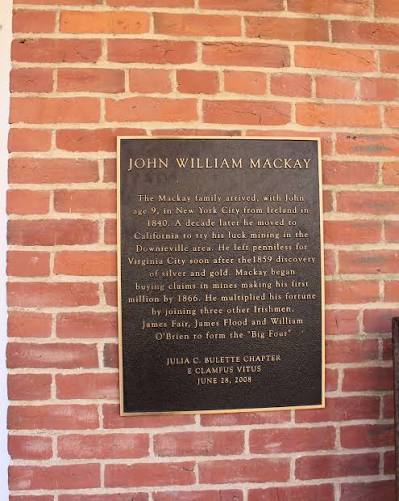
The numbers associated with the Big Bonanza have grown so large in modern retellings that they are frequently exaggerated. The safer historical approach separates the mine’s total production from Mackay’s own wealth. The Consolidated Virginia and California mines together produced tens of millions of dollars in bullion and paid enormous dividends through the 1870s. Mackay’s personal share made him one of the richest men in the United States, and by contemporary reputation, one of the richest men anywhere.
Later estimates of his fortune vary considerably. Even University of Nevada archival material places his estate at his death somewhere between roughly thirty and sixty million dollars, a wide enough range to suggest how imprecise contemporary accounting could be. Claims that he was worth the modern equivalent of tens of billions of dollars depend heavily on the inflation method chosen and are best treated as illustrative rather than exact.
What can be said with confidence is that the transition itself was astonishing. Within little more than a decade, a man who had worked underground for day wages controlled a substantial share of one of the richest mining enterprises the world had ever seen.
A Mining Baron Who Still Went Underground
Mackay’s public standing on the Comstock was unusually favorable for a man of such wealth. He was remembered as the mining king who still understood miners because he had once been one. Later accounts credit him with resisting wage reductions and insisting on the traditional four-dollar day even when other owners wavered. These stories fit the reputation that followed him for the rest of his life, but some versions survive mainly in retrospective biographies rather than in easily verified contemporary company records, and they are best treated as evidence of how Mackay was remembered rather than as settled fact.
There is firmer ground in his documented ties to Virginia City institutions. Mackay and his wife, Marie Louise, supported the Sisters of Charity and the hospital that became St. Mary Louise Hospital. Scholarship published in The Public Historian documents Louise Mackay’s purchase and donation of the hospital site, and John Mackay’s own contribution of fuel to the operation, in a mining community where injury was routine and miners made up a substantial share of the patients.
His popularity should be kept in proportion. Mackay was not simply a benevolent former laborer. He was a major capitalist, and the Bonanza interests fought Nevada bullion taxation and maintained real political influence; a Nevada Historical Society study of the period documents Bonanza representatives active during legislative fights over mining taxes. The same man could be generous to individual miners and institutions while vigorously defending a corporate empire.
The Mackay Mansion, and a Caution About Legend
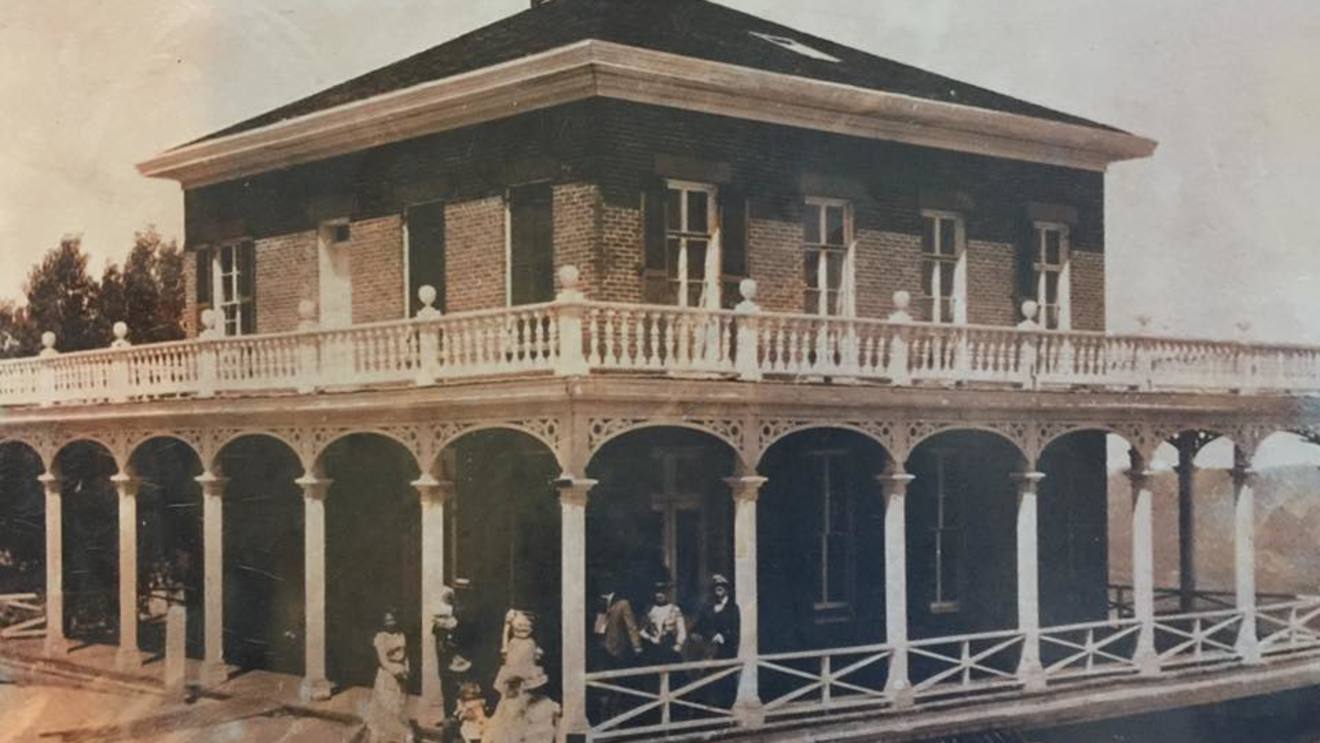
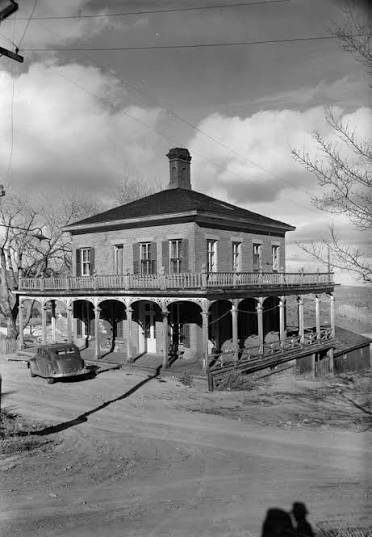
Virginia City’s so-called Mackay Mansion is one of the places where popular history needs careful wording. The substantial brick building on South D Street was constructed around 1860 as the office and superintendent’s residence of the Gould & Curry Mining Company. Architectural and historical sources agree on that original function.
Later tradition attached the building to Mackay’s name, and state and historical sources indicate that after the Great Fire of 1875 it served as his Virginia City residence or headquarters. The safer description, then, is not that Mackay built the mansion or lived there throughout his rise, but that a building first raised for a rival company’s office became associated with him only after he was already a Bonanza King. The distinction is a small one, but it is exactly the kind of detail that separates documented Virginia City history from the simplified version told on a walking tour.
The Fire of 1875 and Rebuilding
Mackay’s fortune reached its height just as Virginia City suffered one of its greatest catastrophes. The Great Fire of October 26, 1875, destroyed much of the town. The principal mines survived, but thousands of residents faced sudden displacement, and businesses across the district had to rebuild from nothing.
Mackay’s name appears in that reconstruction story. Later historical accounts credit him with financial assistance toward rebuilding Piper’s Opera House and other civic institutions. More broadly, the town’s rapid recovery was possible in part because the Big Bonanza was pouring money through Virginia City at precisely the moment it needed capital most. The contrast was characteristic of the Comstock as a whole: extraordinary destruction above ground, occurring at the same time as extraordinary wealth continued to rise from below it.
Beyond Silver: Bank and Cable Wars
Mackay did not spend the rest of his life simply collecting mining dividends. The Bonanza partners established the Bank of Nevada in San Francisco, and Mackay later moved aggressively into communications. In the 1880s he became a central figure in the Commercial Cable Company and the Postal Telegraph system, challenging the transatlantic cable and telegraph interests associated with Jay Gould and Western Union.
The second career echoed the first. On the Comstock, Mackay had challenged an entrenched financial combination and eventually broken its hold. In communications, he entered a business already dominated by powerful incumbents and spent heavily to build an alternative network. Jay Gould, unable to compete on price, is reported to have said of him that if Mackay needed another million, he would simply go into his silver mines and dig it out. The remark, whatever its exact wording, captures something true: Mackay carried out of Nevada not merely silver money, but a settled confidence that enormous capital, applied patiently, could break even the most entrenched monopoly.
Family, Wealth, and Distance from Virginia City
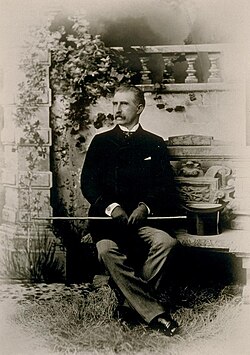
Mackay married Marie Louise Hungerford Bryant in Virginia City in 1867. She was a widow with a young daughter, Eva, whom Mackay later formally adopted. The couple had two sons, John William Jr. and Clarence Hungerford Mackay. As the family’s wealth grew, Louise spent increasing stretches of her life in San Francisco and then in Europe, eventually becoming a prominent society hostess in Paris.
The contrast is striking. Mackay’s fortune began in wet, timbered mine workings beneath Virginia City and Gold Hill, while his family entered an international social world of Paris and London that had nothing to do with the Comstock at all. Yet the Nevada connection never fully disappeared. After Mackay’s death in London on July 20, 1902, Marie Louise and Clarence made major gifts to the University of Nevada in his memory.
The Mackay School of Mines building and the John Mackay statue were dedicated in 1908. The statue, sculpted by Gutzon Borglum years before his work on Mount Rushmore, portrays Mackay not in evening clothes or banker’s dress but as a working miner, holding a pick and a piece of ore. University tradition deliberately oriented the figure to face the mountains of Virginia City.
Was Mackay Really Different from the Other Bonanza Kings?
In reputation, certainly. Mackay is remembered more warmly than Fair, Flood, or O’Brien, and considerably more warmly than William Sharon. Part of that reputation came from his beginnings as a wage-earning miner. Part came from philanthropy and the personal stories later repeated by miners and Nevada writers. Part came from the fact that his family gave so heavily, and so visibly, to the University of Nevada after his death.
But the historical record does not support turning that favorable reputation into sainthood. Mackay profited from speculative mining markets, took part in a corporate combination that controlled essential Comstock services, and defended the tax interests of the Bonanza properties as fiercely as any of his rivals. The more interesting conclusion is not that Mackay stood somehow outside the Gilded Age. It is that he was fully part of it, while retaining, longer than most of his peers, an identity rooted in the physical, dangerous work that had made his fortune possible.
Conclusion
John Mackay’s story is often reduced to a simple western success tale: poor Irish immigrant, four-dollar miner, Big Bonanza, millionaire. The outline is accurate enough, but it leaves out what actually made the rise possible. Years of unsuccessful mining in California taught him how difficult ore was to find and how easily a man’s capital disappeared. Work on the Comstock taught him timbering, underground organization, and the particular economics of deep mining. Partnership supplied the capital he could not have raised alone. The defeat of the Bank of California’s interests gave the Bonanza Firm room to expand. Then, after years of accumulated risk, the Consolidated Virginia and California mines opened into an ore body extraordinary enough to change the course of all four men’s lives.
The most fitting monument to Mackay may be the one that stands at the University of Nevada rather than any of the mansions or cable offices that came later. It shows no banker, no cable magnate, no international millionaire. It shows a miner holding a pick, examining a piece of ore, facing the mountains where he first learned the trade that made everything afterward possible.
Bibliography
Primary and Contemporary Sources
- Consolidated Virginia Mining Company. Annual Report. San Francisco, 1875. Digitized by Google Books from the University of California.
- De Quille, Dan (William Wright). History of the Big Bonanza: An Authentic Account of the Discovery, History, and Working of the World-Renowned Comstock Silver Lode of Nevada. Hartford: American Publishing Company, 1876. Public-domain digital edition, Project Gutenberg, eBook 74667.
- Lord, Eliot. Comstock Mining and Miners. U.S. Geological Survey Monograph 4. Washington, D.C.: Government Printing Office, 1883.
- Nevada State Mineralogist. Biennial Report of the State Mineralogist of the State of Nevada for the Years 1873 and 1874. Carson City, 1875. Nevada State Library, Archives and Public Records digital collection.
- “Bonanza King John W. Mackay Was a Monte Cristo in Real Life.” New York World, reprinted in Atlanta Semi-Weekly Journal, July 28, 1902.
Secondary Sources and Modern Scholarship
- Crouch, Gregory. The Bonanza King: John Mackay and the Battle over the Greatest Riches in the American West. New York: Scribner, 2018.
- Makley, Michael J. John Mackay: Silver King in the Gilded Age. Reno: University of Nevada Press, 2015.
- Murphy, David. “MacKay, John William.” Dictionary of Irish Biography. Royal Irish Academy.
- University of Nevada, Reno, Special Collections and University Archives. “Mackay, John William, 1831–1902” and “Scrapbook in Honor of John William Mackay,” archival collection guides.
- University of Nevada, Reno. “A Place in History: The Mackay School.” Nevada Today, 2019.
- University of Nevada, Reno. “Mackay Mines.” Building Directory.
- Buell, Amanda, and Alicia Barber. “John Mackay Statue.” Reno Historical.
- Nicoletta, Julie. “Mackay Mansion.” SAH Archipedia. Society of Architectural Historians.
- “Mining Charity: Material Culture and Philanthropy on the Comstock.” The Public Historian 46, no. 2 (2024).
- Nevada Historical Society Quarterly. Studies of Comstock mining, labor, taxation, and Bonanza-era political influence.
- Mining History Association. “Virginia City, Nevada, and the Comstock Lode.” Includes bibliography and links to Eliot Lord and other technical histories.
- Smith, Grant H. The History of the Comstock Lode, 1850–1997. Reno: University of Nevada Press, 1943 (reprint).
- “John William Mackay.” Online Nevada Encyclopedia.