By James Randall
In 1872, a blacksmith named Timothy Francis McCarthy was working for the Savage Mine in Virginia City. Somewhere below him, miners were driving workings as deep as the 1,000-foot level. Their steel dulled against rock, came back to the forge, was sharpened and tempered, then returned underground to be used again. A hole was drilled, powder was loaded, the face was blasted, broken rock was removed, and the new ground was examined. Then the process started over.
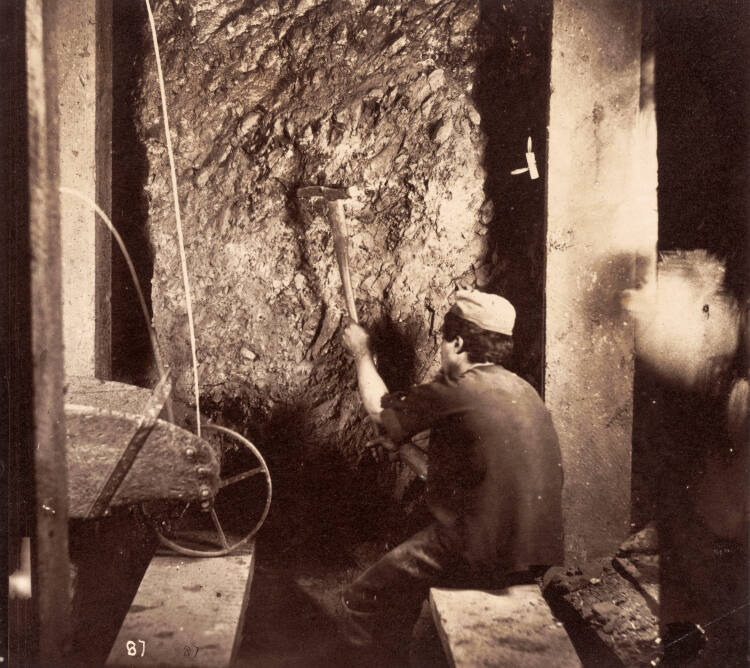
This was mining even when the mine was not finding much worth selling.
The history of the Comstock is usually told through its bonanzas. Rich ore appears, stock rises, mills roar, and fortunes are made. The Savage Mine offers the other side of that story. From roughly 1865 through 1873, after its first rich ore bodies began to fail, the company kept spending money and labor searching for another major deposit. The University of Nevada, Reno archival guide summarizes the period bluntly: little ore was located between 1865 and 1873. Yet the mine did not simply close. Men kept drilling, blasting, timbering, pumping, hoisting and extending underground workings while investors continued financing the search.
The phrase “little ore” needs one qualification. Savage was not literally barren throughout these years. Surviving assay and bullion records show production in parts of the period, and the 1873 annual report reportedly recorded 33,414 tons of ore during the preceding year. The more revealing story is not eight years with no silver at all. It is the long, expensive interval in which profitable ore became uncertain, development work continued, and each new drift carried the possibility that the next few feet might change everything.
The Savage Had Already Learned the Wrong Lesson About Giving Up
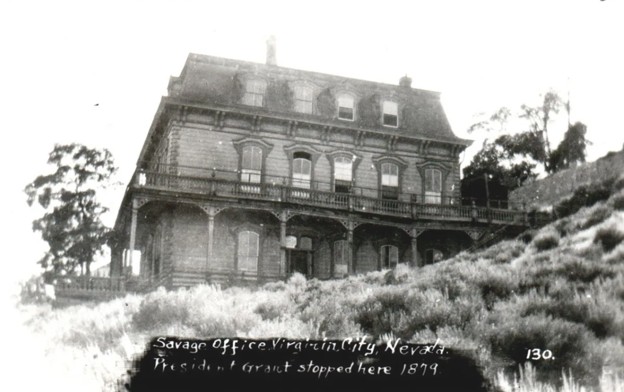
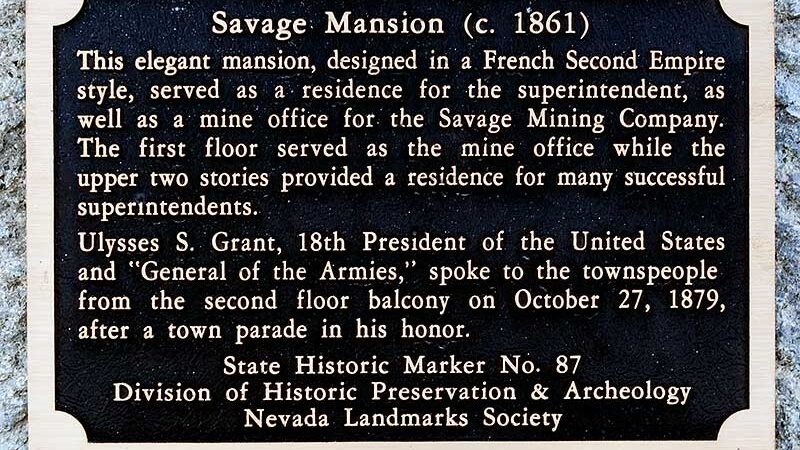
Before the lean years, Savage had been one of the fortunate mines of the early Comstock. Its claim occupied about 800 feet of the Middle Mines, between Gould & Curry on the north and Hale & Norcross on the south. That position mattered because ore bodies did not stop at corporate property lines.
The Savage benefited from exactly that fact. Two of its important early successes were connected to ore bodies first recognized in neighboring ground. One extended from the Gould & Curry side; another important body was associated with Hale & Norcross near the 600-foot level. Later historians called Savage a “child of fortune,” an apt description for a company whose location had repeatedly rewarded persistence.
That history shaped every decision that followed. If a neighboring mine could discover an ore body that continued into Savage ground, then apparently disappointing ground could never be dismissed too casually. The company had already seen a mine move from uncertainty to wealth because somebody kept digging.
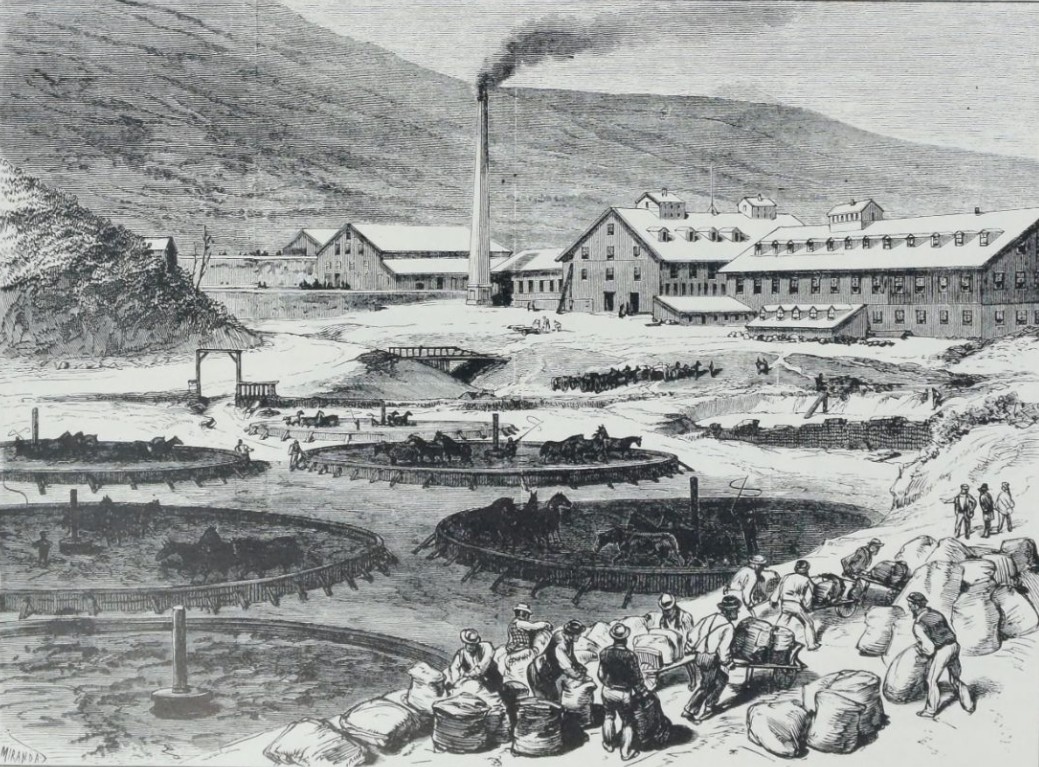
By 1865, however, the arithmetic had become uncomfortable. A scholarly reconstruction by Sarah Cowie and Lisa Machado reports that the rich upper ore body had produced about $3.6 million, while Savage had paid about $800,000 in dividends and was carrying roughly $500,000 in debt. Savage stock, which had risen to about $3,500 amid the enthusiasm of 1863, had fallen to around $700 by December 1865. The mine still employed about 150 men at the beginning of 1865 and roughly 176 in 1866. The machinery, payroll and underground development continued even as the easy confidence of the early bonanza years disappeared.
What Did “Finding Nothing” Actually Mean?
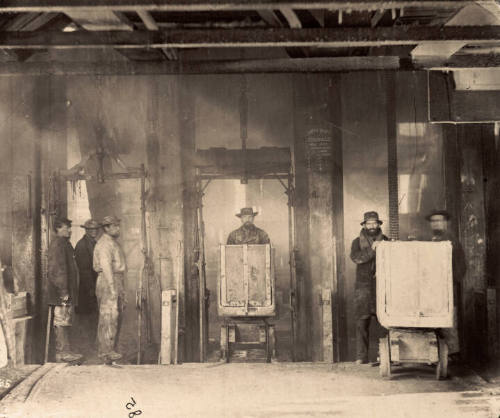
A deep hard-rock mine did not search for ore by sinking one hole and waiting for silver to appear. Once a shaft reached a useful depth, crews opened stations and drove horizontal workings through the ground. Drifts could follow the expected course of the vein. Crosscuts could probe across it. Raises went upward. Winzes went downward from existing levels. Surveying, mapping and assaying turned these openings into a growing three-dimensional picture of what lay beneath the surface.
Every foot cost money. Rock had to be drilled, blasted and removed. Dangerous ground required timber. Hoists had to lift men, equipment and waste rock. Pumps dealt with water. Blacksmiths repaired drill steel. Engineers tended machinery. Samples had to be tested. A drift that eventually proved barren had produced no bullion, but it had consumed wages, explosives, timber, fuel, machine time and management attention.
Its real product was information.
The surviving Savage mine maps make that point visible. Nevada Bureau of Mines and Geology records include a 1868 map of the Savage, a 1870 map showing the seventh and eighth stations, and a detailed 1872 map drawn at one inch to thirty feet. The maze of workings was not accidental. It was the physical record of questions asked underground: Is the vein here? Does it widen? Does the rock improve? Do assays rise? Does the ore discovered next door continue across the boundary?
How Management Decided Where to Dig Next
There was no geological imaging and no computerized model of the Comstock. Management relied on underground observations, surveys, assays, experience and knowledge of what neighboring mines were encountering. The process was repetitive: dig, inspect, sample, assay, map, reconsider, then dig again.
Even appearance could mislead. A contemporary 1868 description from the Gold Hill Daily News, preserved in later mineralogical research, noted that profitable material in the Savage and Hale & Norcross could occur in greenish altered rock that did not necessarily look valuable to an inexperienced observer. Familiarity with the ground mattered, but the assay ultimately answered the financial question.
Savage records from 1867 contain numerous assay and bullion transactions involving material sent through different mills and assay facilities. The surviving paperwork is a reminder that mining was not merely an underground craft. It was also a constant process of measuring whether the rock coming out of the ground justified what the company was spending to reach it.
Why Investors Kept Paying
When mine income could not cover the cost of continued work, shareholders could be asked for more capital through assessments. Owning nineteenth-century mining stock therefore did not always mean that the investor’s financial obligation ended with the purchase of the shares. A company could levy an additional amount per share, and delinquent stock could eventually be sold under the company’s procedures.
The precise Savage assessment history for 1865 through 1873 still needs fuller archival reconstruction. UNR’s surviving assessment roll begins in 1877, while earlier annual reports and company correspondence remain promising sources. The general financial mechanism, however, explains how a mine could continue exploring when ore proceeds were not enough. Shareholders collectively became a recurring source of risk capital.
Why would they agree? Savage itself had already given them one reason. The mine had benefited when ore bodies discovered in adjoining properties extended into its ground. A new discovery at Gould & Curry or Hale & Norcross could immediately alter expectations for Savage. An unsuccessful 300 feet of development did not prove that 350 feet would be equally disappointing.
There was also the weight of money already spent. Shafts, hoists, pumps, buildings and underground workings represented capital that could not simply be carried elsewhere. Closing the mine protected investors from another assessment, but it also surrendered whatever chance remained of recovering the earlier investment. Modern economics has a name for the temptation to keep committing resources because so much has already been spent. Whether individual Savage shareholders thought in precisely those terms cannot be demonstrated from the evidence now in hand, but the financial pressure is easy to see.
A Workingman Named Timothy McCarthy
The most useful human evidence from this period comes from Timothy Francis McCarthy, an Irish immigrant and blacksmith whose diary was studied by historian Ronald M. James. McCarthy was not one of the men swinging a hammer at the rock face, but he was part of the underground production system. Drill steel dulled and deformed in use. A blacksmith reheated, reshaped and tempered it so the miners could take it back underground.
In 1872 McCarthy recorded work associated with the Savage down to the 1,000-foot level. He generally worked six days a week and rarely earned more than about $4 a day. When he was sick and could not work, he earned nothing. His diary is full of the concerns of an ordinary wage earner rather than the language of a stock promoter. He recorded work, housing, church and family life. His wife became seriously ill during pregnancy and died in 1872. McCarthy took her body east for burial, then returned to Virginia City and resumed work at the Savage.
His diary does not tell us that he resented barren development or believed management was foolish to continue. The surviving evidence should not be made to say that. What it does reveal is a useful difference in perspective. Investors needed the mine eventually to find profitable ore. McCarthy needed the mine to keep employing him.
For the shareholder, a barren drift represented capital disappearing into the mountain. For a blacksmith or miner receiving his wages, the same drift could mean another week of work.
The Comstock Made Failure Hard to Recognize
The difficulty was that the Comstock repeatedly rewarded people who refused to accept apparent failure. Early Savage history had done so, and the early 1870s supplied even more dramatic examples.
The Crown Point and Belcher discoveries showed again that major ore could appear after costly development. Then, in 1873, the Consolidated Virginia discovery developed into the Big Bonanza. These successes did not prove that every deep mine would eventually become rich. Far from it. They did prove that barren ground above, beside or between ore bodies could not safely be treated as a final verdict.
This is one reason the famous bonanzas distort our picture of mining. History naturally preserves the spectacular strikes because they generated fortunes, lawsuits, newspaper headlines and enduring names. Much less attention goes to the shifts when men drilled a face, blasted it, cleared the rubble, installed timber, sampled the rock and went home without producing marketable ore.
Those uneventful shifts were not exceptions to mining. They were part of mining.
Going Deeper Made Every Question More Expensive
As Savage chased deeper possibilities, the physical cost of asking geological questions increased. Longer hoisting distances, pumping, ventilation, maintenance and timber all added expense. The 1873 Savage report is especially suggestive because it notes that work on deeper levels resumed after adequate ventilation became available. Before management could learn whether the next level contained ore, it first had to make the level workable for human beings.
By 1875 the cost of deep exploration had become great enough that Savage joined Hale & Norcross, Chollar and Potosi in cooperative deep development associated with the Combination Shaft. Shared infrastructure offered a practical answer to a problem the lean years had made increasingly obvious: individual companies could not indefinitely duplicate every expensive system required to explore the deepest parts of the Lode.
What the Savage Years Really Tell Us
The years from 1865 to 1873 should not be remembered as a simple stretch in which Savage found nothing. The mine sometimes produced ore, shipped bullion and kept substantial numbers of men at work. What changed was certainty. The company had moved from exploiting known rich ground to financing an underground search whose outcome could not be predicted.
That search depended on a chain of people who experienced the same mine in very different ways. Miners and timbermen opened the ground. McCarthy and other blacksmiths kept the tools usable. Engineers hoisted and pumped. Superintendents studied maps and assays. Shareholders, often far from Virginia City, decided whether another assessment was worth paying.
All of them were tied to the same question: how long do you keep digging when the last bonanza is behind you and the next one may not exist?
Conclusion
The most famous Comstock stories begin when rich ore is found. The Savage Mine’s lean years are valuable because they begin with the harder question of what happened before anyone knew whether another bonanza existed.
For years, the company paid men to drive workings through ground that often produced little immediate return. That was not simply wasted labor. Each drift narrowed the unknown, each assay added another piece of evidence, and each neighboring discovery reopened possibilities that had seemed to be closing. The economics could be punishing, and the hope could become difficult to distinguish from persistence for its own sake, but the logic was rooted in the peculiar geology and history of the Comstock.
Savage had already learned that a fortune could lie just beyond disappointing ground. That lesson kept men working and money flowing long after the first easy bonanzas had faded. Mining history remembers the moment the silver appeared. The Savage years remind us how much work came before it, and how often the mountain answered with rock.
References
Primary and Contemporary Sources
Savage Mining Company Records, NC62. Special Collections and University Archives, University Libraries, University of Nevada, Reno. Includes annual reports, 1871-1874; 1868 bullion shipment records; and later assessment records. https://archive.library.unr.edu/public/repositories/2/resources/79
Savage Mining Company Correspondence, 2011-23. Special Collections, University Libraries, University of Nevada, Reno. Correspondence, 1866-1876, concentrated in 1867-1868. https://archive.library.unr.edu/public/repositories/2/resources/3768
Nevada Bureau of Mines and Geology. Digital Mining District Files. “Map of the Savage Mine,” I. E. James, 1868, ID 12000574; related Savage underground maps and workings. https://collections.nbmg.unr.edu/pages/search.php?access=&archive=&display=list&foredit=&k=&modal=&noreload=true&offset=5832&order_by=field106&per_page=72&recentdaylimit=&restypes=&search=%21collection64329+&sort=ASC
Savage Mining Company assay and bullion memoranda, 1860s-1870s, surviving original documents described in Holabird Western Americana auction catalogs. These were used as corroborative evidence and research leads rather than as a substitute for institutional originals. https://pubhtml5.com/esfe/rgum/basic/151-200
Secondary Sources and Modern Scholarship
Cowie, Sarah E., and Lisa Machado. “History, Technological Innovation, and Potential for Industrial Archaeology of the Old Savage Mine Site, Virginia City, Nevada.” Nevada Archaeologist 26 (2013). https://nvarch.org/amcs/wp-content/uploads/2017/09/2013-Volume-26-Nevada-Archaeologist.pdf
James, Ronald M. “Timothy Francis McCarthy: An Irish Immigrant Life on the Comstock.” Nevada Historical Society Quarterly 39, no. 4 (Winter 1996): 300-308. Publication information and abstract available through the author’s University of Nevada, Reno profile. https://nevada-reno.academia.edu/RonaldJames/History%20of%20the%20American%20West
University of Nevada, Reno Special Collections and University Archives. “Savage Mining Company Records,” archival historical note and collection description. https://archive.library.unr.edu/public/repositories/2/resources/79
Nevada Bureau of Mines and Geology. Digital Mining District Files, Savage Mine and related Comstock mining maps. https://collections.nbmg.unr.edu/pages/search.php?access=&archive=&display=list&foredit=&k=&modal=&noreload=true&offset=32112&order_by=field91&per_page=72&recentdaylimit=&restypes=&search=&sort=DESC